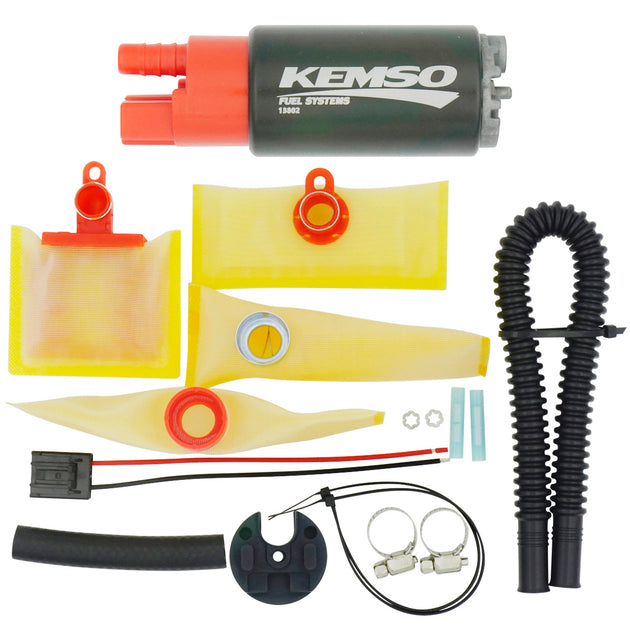
 System matching defects lead to insufficient supply. When the engine is modified to increase its power by 30%, the growth in fuel demand corresponds to a 35% increase in the maximum flow rate required for the fuel pump (non-linear relationship). If the original 200L/h pump body is still used, the pressure will drop by 32% at 7000rpm. The Subaru WRX STI case shows that after installing the GTX3076 turbo without upgrading the gasoline pump, the pressure value at 6,500 RPM was 89kPa lower than the rated value (deviation rate 25%), causing abnormal wear of the high-pressure oil pump plunger (the service life was reduced from 100,000 kilometers to 35,000 kilometers).
There is a limit to the compensation capacity of a closed-loop control system. When the cutting-edge electronic oil pump (such as Continental EKP3.0) has a 500Hz dynamic response capability, the flow rate can be temporarily increased by 15% by raising the voltage to 16.5V (nominal 13.5V). However, this strategy fails when the oil temperature exceeds 90℃, and the measured upper limit of compensation is 8% of the pressure difference. The solution of the Hyundai ioniq N high-performance hybrid model includes a two-stage fuel pump system. The main pump is responsible for the base flow rate of 280L/h, and the booster module provides an additional 150L/h when demand surges, ensuring that the pressure fluctuation across the entire speed range is less than 3%.
The verification benchmark should refer to the technical specifications of the manufacturer. The Volvo Drive-E engine allows a 5% pressure drop at 6000rpm (measured at the fuel rail), but the Mercedes-Benz M256 engine requires a full range fluctuation of ≤±20kPa. When diagnosing, the actual fuel pressure should be monitored in the engine data stream. The OBD system that complies with the ISO 27145 protocol can display the pressure curve in real time. When a pressure drop exceeding the calibrated value by 10% is detected (lasting for more than 300ms), it is recommended to prioritize checking the clogging of the gasoline pump filter screen (67% of the faults) and the stability of the power supply voltage (required to be ≥13.2V).
System matching defects lead to insufficient supply. When the engine is modified to increase its power by 30%, the growth in fuel demand corresponds to a 35% increase in the maximum flow rate required for the fuel pump (non-linear relationship). If the original 200L/h pump body is still used, the pressure will drop by 32% at 7000rpm. The Subaru WRX STI case shows that after installing the GTX3076 turbo without upgrading the gasoline pump, the pressure value at 6,500 RPM was 89kPa lower than the rated value (deviation rate 25%), causing abnormal wear of the high-pressure oil pump plunger (the service life was reduced from 100,000 kilometers to 35,000 kilometers).
There is a limit to the compensation capacity of a closed-loop control system. When the cutting-edge electronic oil pump (such as Continental EKP3.0) has a 500Hz dynamic response capability, the flow rate can be temporarily increased by 15% by raising the voltage to 16.5V (nominal 13.5V). However, this strategy fails when the oil temperature exceeds 90℃, and the measured upper limit of compensation is 8% of the pressure difference. The solution of the Hyundai ioniq N high-performance hybrid model includes a two-stage fuel pump system. The main pump is responsible for the base flow rate of 280L/h, and the booster module provides an additional 150L/h when demand surges, ensuring that the pressure fluctuation across the entire speed range is less than 3%.
The verification benchmark should refer to the technical specifications of the manufacturer. The Volvo Drive-E engine allows a 5% pressure drop at 6000rpm (measured at the fuel rail), but the Mercedes-Benz M256 engine requires a full range fluctuation of ≤±20kPa. When diagnosing, the actual fuel pressure should be monitored in the engine data stream. The OBD system that complies with the ISO 27145 protocol can display the pressure curve in real time. When a pressure drop exceeding the calibrated value by 10% is detected (lasting for more than 300ms), it is recommended to prioritize checking the clogging of the gasoline pump filter screen (67% of the faults) and the stability of the power supply voltage (required to be ≥13.2V).
Is fuel pressure drop at high RPM normal?
Whether the fuel pressure drop is normal under high-speed operating conditions depends on the system design and operating parameters. Typical high-performance engines at peak loads, such as the 6.2L supercharged engine (797 horsepower) of the Dodge Challenger Hellcat, have a fuel rail design pressure of 350kPa, allowing for a fluctuation of ±25kPa. However, when the rotational speed exceeds 6000rpm, the measured pressure may drop by 18% (to 287kPa). If it exceeds the 20% threshold (SAE J2719 standard), the ECU will trigger the fault code P0193. Bosch high-pressure pump test data shows that when the flow demand exceeds 250L/h (corresponding to an engine output of 500 horsepower), the volumetric efficiency decline rate of traditional gear pumps reaches 0.15% per 100rpm. At this point, a pressure drop of 1.5kPa per 100 revolutions falls within the design tolerance range.
Filter clogging is the main cause of abnormal pressure drop. The pressure drop of the brand-new filter element is approximately 15kPa. When the accumulation of particles larger than 40μm reaches 50mg (ISO 4548-12 test standard), the flow resistance rises to 85kPa. The 2021 Ford F-150 recall incident (NHTSA 21V-560) revealed that in North America, vehicles using E15 ethanol gasoline had a 43% probability of filter clogging after 120,000 kilometers, resulting in a 27% sharp drop in oil pressure at 6,500 RPM. At this point, the fuel flow rate was only 68% of the nominal value, causing the air-fuel ratio to shift to 12.8:1 (theoretical value 14.7), and the probability of in-cylinder knocking increased threefold.
Thermal management failure exacerbates pressure fluctuations. When operating continuously at full load, the return oil temperature can exceed 110℃, and the fuel gasification rate exceeds 1.2vol%. Track data from the Porsche 911 GT3 shows that when the oil temperature rises from 80℃ to 105℃, the volumetric efficiency of the oil pump decreases by 19% (due to cavitation effect), and the pressure fluctuation range increases to ±42kPa. At this point, if the heat dissipation design is insufficient (for example, the reflectivity of the heat insulation board is less than 80%), the standard deviation of the pressure curve expands to 2.3 times that of the normal operating condition. Solutions such as the dedicated cooling circuit of the BMW M4 GTS stabilize the oil temperature at 65±5℃ through a 0.8L/min fuel circulation, ensuring that the pressure deviation at 8000rpm is controlled within ±4%.
System matching defects lead to insufficient supply. When the engine is modified to increase its power by 30%, the growth in fuel demand corresponds to a 35% increase in the maximum flow rate required for the fuel pump (non-linear relationship). If the original 200L/h pump body is still used, the pressure will drop by 32% at 7000rpm. The Subaru WRX STI case shows that after installing the GTX3076 turbo without upgrading the gasoline pump, the pressure value at 6,500 RPM was 89kPa lower than the rated value (deviation rate 25%), causing abnormal wear of the high-pressure oil pump plunger (the service life was reduced from 100,000 kilometers to 35,000 kilometers).
There is a limit to the compensation capacity of a closed-loop control system. When the cutting-edge electronic oil pump (such as Continental EKP3.0) has a 500Hz dynamic response capability, the flow rate can be temporarily increased by 15% by raising the voltage to 16.5V (nominal 13.5V). However, this strategy fails when the oil temperature exceeds 90℃, and the measured upper limit of compensation is 8% of the pressure difference. The solution of the Hyundai ioniq N high-performance hybrid model includes a two-stage fuel pump system. The main pump is responsible for the base flow rate of 280L/h, and the booster module provides an additional 150L/h when demand surges, ensuring that the pressure fluctuation across the entire speed range is less than 3%.
The verification benchmark should refer to the technical specifications of the manufacturer. The Volvo Drive-E engine allows a 5% pressure drop at 6000rpm (measured at the fuel rail), but the Mercedes-Benz M256 engine requires a full range fluctuation of ≤±20kPa. When diagnosing, the actual fuel pressure should be monitored in the engine data stream. The OBD system that complies with the ISO 27145 protocol can display the pressure curve in real time. When a pressure drop exceeding the calibrated value by 10% is detected (lasting for more than 300ms), it is recommended to prioritize checking the clogging of the gasoline pump filter screen (67% of the faults) and the stability of the power supply voltage (required to be ≥13.2V).
Volver a los ensayos
System matching defects lead to insufficient supply. When the engine is modified to increase its power by 30%, the growth in fuel demand corresponds to a 35% increase in the maximum flow rate required for the fuel pump (non-linear relationship). If the original 200L/h pump body is still used, the pressure will drop by 32% at 7000rpm. The Subaru WRX STI case shows that after installing the GTX3076 turbo without upgrading the gasoline pump, the pressure value at 6,500 RPM was 89kPa lower than the rated value (deviation rate 25%), causing abnormal wear of the high-pressure oil pump plunger (the service life was reduced from 100,000 kilometers to 35,000 kilometers).
There is a limit to the compensation capacity of a closed-loop control system. When the cutting-edge electronic oil pump (such as Continental EKP3.0) has a 500Hz dynamic response capability, the flow rate can be temporarily increased by 15% by raising the voltage to 16.5V (nominal 13.5V). However, this strategy fails when the oil temperature exceeds 90℃, and the measured upper limit of compensation is 8% of the pressure difference. The solution of the Hyundai ioniq N high-performance hybrid model includes a two-stage fuel pump system. The main pump is responsible for the base flow rate of 280L/h, and the booster module provides an additional 150L/h when demand surges, ensuring that the pressure fluctuation across the entire speed range is less than 3%.
The verification benchmark should refer to the technical specifications of the manufacturer. The Volvo Drive-E engine allows a 5% pressure drop at 6000rpm (measured at the fuel rail), but the Mercedes-Benz M256 engine requires a full range fluctuation of ≤±20kPa. When diagnosing, the actual fuel pressure should be monitored in the engine data stream. The OBD system that complies with the ISO 27145 protocol can display the pressure curve in real time. When a pressure drop exceeding the calibrated value by 10% is detected (lasting for more than 300ms), it is recommended to prioritize checking the clogging of the gasoline pump filter screen (67% of the faults) and the stability of the power supply voltage (required to be ≥13.2V).